Water Damage Restoration Services in Glendale, CA — 24/7 Water Removal, Drying & Repairs
A burst supply line at 2 a.m., a ceiling stain spreading under an upstairs bathroom, mud pushing under the patio door after an atmospheric river. Water damage never waits for business hours, and neither do we. Ameri Glen Restoration has delivered water damage restoration in Glendale, CA, with 40 trained technicians and fully equipped trucks based on West Colorado Street in downtown Glendale. We find the source, extract the water, dry your home to the IICRC S500 standard, document every reading for your insurance company and rebuild what has to come out. One local team handles it from the first call to the final coat of paint.
Call (747) 342-2444 any hour. We answer 24/7 and give you an arrival window before you hang up.
Direct Insurance Billing & Carrier-Format Estimates
Licensed & Insured — CSLB Lic.
Why Act on Water Damage Before the Next Big Rain Hits Glendale?
Because water damage gets more expensive by the hour, and this winter is shaping up to be a wet one. NOAA's Climate Prediction Center has an El Niño Advisory in effect and rates a strong-to-very-strong El Niño as likely through –. February is typically Glendale's wettest month, so the heaviest storms may still be ahead.
Waiting turns a drying job into a rebuild for three reasons:
Mold moves fast. The EPA says water-damaged areas should be dried within 24–48 hours to prevent mold growth. Miss that window and you may pay for mold remediation on top of drying.
Clean water turns dirty. Under the IICRC S500 standard, clean water from a supply line can degrade into gray or black water as it sits and picks up contaminants. Dirtier water means more drywall, carpet and pad go to the dumpster.
Your insurance policy expects you to act. Most homeowners policies require reasonable steps to protect the property from further damage. Fast extraction and a documented drying log protect both your home and your claim.
Why Does Water Damage Spread So Fast in Glendale Homes?
Because of how Glendale is built. About two-thirds of the city's homes went up before 1980. Roughly six in ten housing units sit in multi-unit buildings, where one failed supply line can reach the unit below. Water follows gravity and the path of least resistance. In Glendale, that path runs through a few predictable places:
Lath-and-plaster walls. The 1920s–1940s Spanish Colonial Revival, Tudor and Craftsman homes in neighborhoods like Rossmoyne hide water behind a hard plaster face that dries slowly and stains late.
Raised foundations and crawl spaces. Leaks pool under the floor framing for weeks before anyone smells them. Our crawl space water damage drying targets exactly this.
Concrete slabs. Postwar ranches and 1960s–80s apartments hide pinhole leaks in aging copper lines until the floor feels warm or the GWP bill jumps.
Hillside lots. In the Verdugo Woodlands, Chevy Chase Canyon and the San Rafael Hills, storm runoff from the slope above pushes straight into downslope walls and garages. A lot of the Verdugo Woodlands water damage we're called to after storms starts right there.
Stacked units south of the 134. Shared walls and ceilings carry water from one bathroom into the neighbor's kitchen below.
Clay tile roofs. The tiles can look perfect from the street while the underlayment beneath them has failed. See our roof leak water damage repair.
That's why effective water damage restoration starts with finding where the water went, not just where you first saw it. Every Ameri Glen inspection includes moisture mapping and thermal imaging before anything gets torn out.
How Long Does Water Damage Restoration Take in Glendale?
Most clean-water losses in Glendale dry in 3 to 5 days, and repairs take another one to three weeks. The real timeline depends on what got wet, what kind of water it was and how long it sat.
Phase
Typical timing
What happens
Emergency response
First few hours
We answer, dispatch, help you stop the source and make the area safe.
Inspection and extraction
Day 1
Moisture mapping, water extraction, controlled removal of wet baseboard, pad or drywall, and drying equipment set up.
Structural drying
Days 1–5
Daily moisture readings and equipment adjustments until every material reaches its dry standard.
Repairs and rebuild
1–3+ weeks
Drywall, plaster, paint, flooring, cabinets and trim, plus permits when the work requires them.
What stretches a water damage repair in Glendale beyond the typical timeline:
Category 3 water from sewage or floodwater, which must be removed and sanitized before drying.
Pre-1980 materials that need asbestos testing before demolition under South Coast AQMD Rule 1403.
Lath-and-plaster walls, hardwood floors and slab leaks, which dry slower than drywall and carpet.
Insurance, HOA and landlord approvals before rebuild work can start.
Special-order materials such as matching tile, hardwood or custom cabinets.
What's the Most Effective Way to Fix Water Damage in an Older Glendale Home?
Targeted, measured drying beats tear-it-all-out demolition almost every time. Find every wet material with meters and thermal imaging, remove only what can't be saved, and dry the rest in place with dehumidifiers and directed airflow. In a 1920s Rossmoyne Spanish Revival or a 1950s Sparr Heights ranch, that approach saves original materials and keeps rebuild costs down.
Here's what it looks like in practice:
Dry plaster in place. Lath-and-plaster walls can often be dried with low-grain-refrigerant (LGR) dehumidifiers and cavity injection through small, patchable holes instead of being demolished.
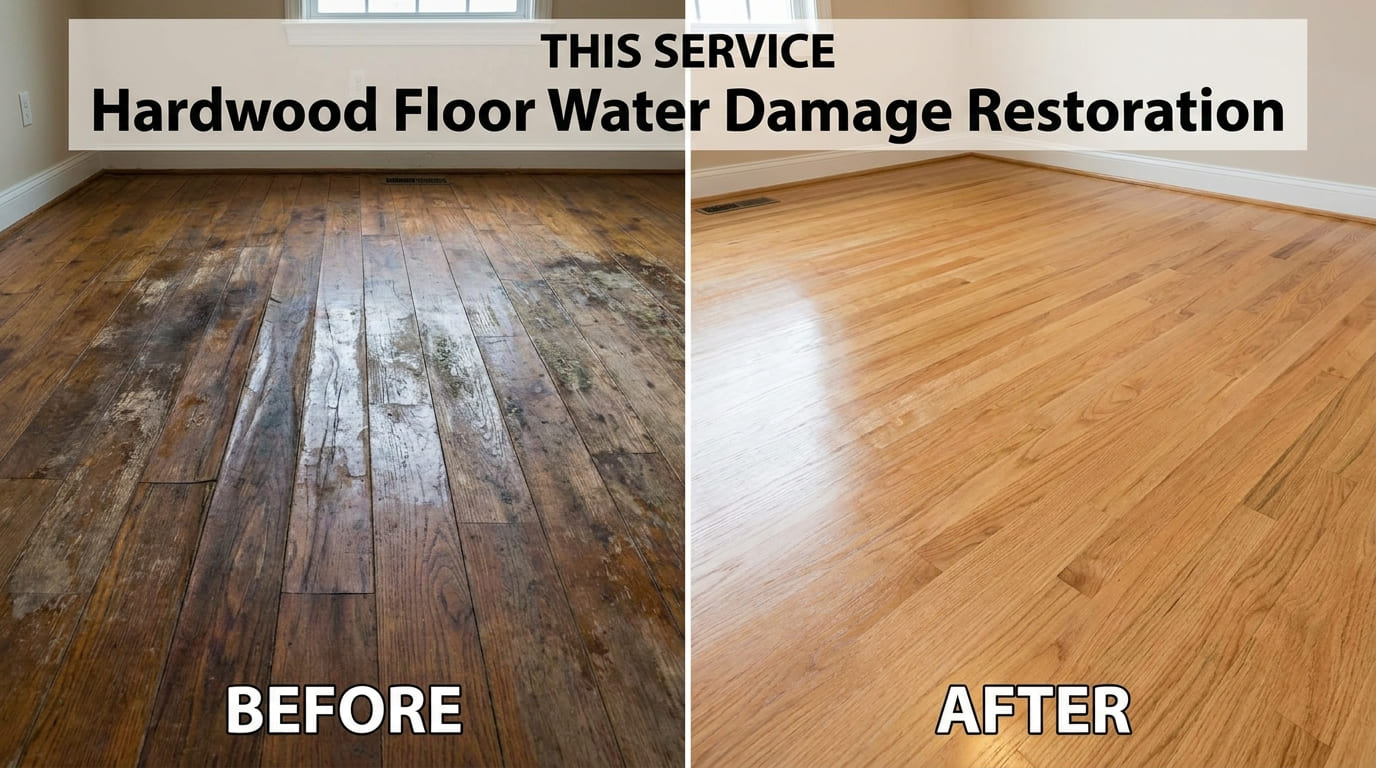
Save hardwood when you can. Floor-drying mats pull moisture out of oak and fir before boards cup or crown, often preserving floors that can't be matched today. Learn more about hardwood floor water damage restoration.
Test before cutting. Popcorn ceilings, drywall joint compound, vinyl flooring and old mastic are tested for asbestos first, and pre-1978 painted surfaces are handled lead-safe.
Dry the cavity, not just the surface. A wall can feel dry while the bottom plate and insulation inside are still wet. We pull baseboards, drill weep holes or remove the lowest strip of drywall only where readings say it's needed.
Match the original finish. Sand-finish plaster, smooth coats, Spanish lace texture and vintage tile get matched instead of covered up.
That's water damage restoration done right: a dry, documented home that still looks like itself.
How Water Moves Through Glendale Homes — and How We Track It
Water damage follows physics, not floor plans. It wicks up plaster and drywall, runs along framing, soaks into subfloors and slab edges, and drops through ceilings into the unit below. Knowing how it travels through Glendale's mix of historic homes, hillside lots and stacked apartments is what separates a truly dry house from a callback.
Why Ameri Glen Restoration Wins in Glendale
We've worked in Glendale since 2010, and our West Colorado Street shop puts 10 response trucks minutes from the 134, the 2 and the 5. That matters at 3 a.m. in the middle of an atmospheric river. As a full-service water damage restoration company in Glendale, we handle the whole job with our own 40-person team. Emergency water removal, drying, mold-safe cleanup and rebuild stay under one roof, so you never get handed off between a mitigation company and a contractor you've never met. Every job is documented in the carrier format adjusters already use.
Water Category Expertise: Clean, Gray and Black Water
The IICRC S500 standard sorts water by contamination, and the category decides what can be saved.
Category 1 (clean): broken supply lines, water heater tanks, sink and tub overflows. Usually dried in place if we get there fast.
Category 2 (gray): washing machine and dishwasher discharge, toilet overflows without feces, aquarium leaks. Carpet pad typically goes; surfaces are cleaned and treated.
Category 3 (black): sewage backups, toilet overflows with waste, rising floodwater and mudflow. Porous materials the water touched are removed, and the area is cleaned and disinfected before drying.
Structural Drying Built for Plaster, Slab and Clay-Tile Homes
Glendale's building stock needs more than box fans pointed at a wall. Our structural drying setups match the construction:
Lath and plaster: cavity injection and LGR dehumidifiers dry the wall without demolition.
Slab-on-grade: after the plumber repairs a slab leak, we dry the flooring, tack strip and slab edge, then confirm readings room by room.
Raised foundations: crawl space drying with dehumidifiers and a vapor-barrier check keeps joists and subfloor free of mold.
Clay tile and flat-roof sections: we trace roof leaks from the ceiling stain back to the failed underlayment, scupper or parapet before drying the attic and ceiling.
Stucco exteriors: we check sill plates and the base of exterior walls, where storm water gets trapped behind stucco.
Condo, HOA and Upstairs-Unit Workflows
Downtown Glendale condo water damage shows why: in a building with shared walls, one leak can involve three units, an HOA board, a property manager and several insurance companies. We keep it organized:
Trace the source unit and map moisture in every affected unit, including the one below.
Separate common-area damage from in-unit damage. California Civil Code §4775 generally makes the association responsible for common areas and owners responsible for their own units, unless the CC&Rs say otherwise.
Deliver one clear report per party: owner, HOA, manager and each insurer.
Coordinate access with the board or manager and give neighbors notice before we start.
Work in tuck-under and subterranean garages with portable extraction gear when a truck can't fit.
Commercial Water Damage Rescue on Brand Boulevard and Beyond
For shops on Brand Boulevard, offices along Central Avenue, and restaurants, clinics and studios across Glendale, every closed hour costs money. Our commercial crews:
Work after hours and in phases so you can stay partly open.
Isolate wet zones with containment to protect inventory, records and customers.
Dry server rooms, tenant improvements and drop ceilings with equipment sized for the space.
Document every step for property and business interruption claims.
Health Risks Hiding in Wet Walls: Mold, Sewage, Asbestos and Lead
Water itself is rarely the biggest danger; what it carries, grows and disturbs is. Mold takes hold quickly on wet drywall, carpet pad and wood, which is why the EPA's 24–48-hour drying window matters. The EPA treats about 10 square feet of mold as the line between a do-it-yourself cleanup and a larger remediation job. It also advises calling an experienced professional whenever the water came from sewage or another contaminated source. Past that line, our AMRT-certified technicians handle mold remediation in Glendale homes using IICRC S520 containment practices.
Older homes add a second layer of risk. About two-thirds of Glendale's housing was built before 1980, when asbestos was still common in popcorn ceilings, drywall joint compound, vinyl flooring and pipe insulation. Homes built before 1978 may also contain lead-based paint. Cutting or sanding those materials can release fibers and dust into the air. That's why South Coast AQMD Rule 1403 requires an asbestos survey before renovation, even after sudden damage, and why we test before we tear out.
Until we arrive, keep your household safe:
Keep children, pets, older adults and anyone with asthma or a weakened immune system away from wet areas.
Don't touch sewage or floodwater without gloves and boots, and wash up right after any contact.
Turn off the HVAC system if water reached the ducts or air handler, so it doesn't spread spores.
Don't cut, sand or scrape pre-1980 drywall, textured ceilings or old flooring before testing.
Shut off power to wet rooms at the breaker only if you can reach the panel from a dry spot.
Leave any mold you find for trained technicians rather than scrubbing or bleaching it.
Licensed, Code-Compliant Water Damage Restoration in California
In California, hiring a water damage restoration company is a legal question as much as a quality one. Any job of $1,000 or more in labor and materials, or any job that needs a permit, requires a contractor licensed by the Contractors State License Board (CSLB). Licensed contractors must also show their license number in every ad, including their website. Ameri Glen Restoration lists its CSLB number on this page, on our trucks and on every contract, so you can verify it with the CSLB in under a minute.
Licensing is the floor, not the ceiling. Our drying follows the IICRC S500 water damage standard, and our mold work follows IICRC S520. We follow South Coast AQMD Rule 1403 for asbestos surveys, EPA lead-safe work practices in pre-1978 homes, and Glendale Building & Safety permit requirements whenever repairs call for them. Asbestos and lead abatement is performed by properly certified and registered abatement professionals. Every step is documented, so your insurer, HOA or landlord sees exactly what was done and why.
What Is the Most Effective Method for Flood Damage Cleanup in Glendale?
When water comes from outside, the most effective method treats it as Category 3 from the start. That includes storm runoff down a hillside, a backed-up street drain or mud pushed through a garage door. Floodwater picks up soil, sewage and debris on the way in, so drying alone isn't enough. In Glendale, this matters most on foothill and canyon streets below the Verdugo Mountains and the San Rafael Hills, where runoff and debris move fast. Chevy Chase Canyon mud cleanup, for example, usually means hauling out silt before any drying can start.
Make it safe. Shut off power to affected circuits, check for gas odors and photograph everything before cleanup starts.
Pump and extract. Truck-mounted and portable extractors remove standing water, and we shovel and haul out mud and silt.
Remove what can't be saved. Carpet pad, wet insulation and drywall are cut away 12 to 24 inches above the water line, after asbestos testing in older homes.
Clean and treat. Every surface the water touched is HEPA-vacuumed, scrubbed and treated with an EPA-registered antimicrobial.
Dry to a measured standard. Dehumidifiers and air movers run until readings match unaffected areas of the home.
Verify and document. Final moisture readings, photos and a written report go to you and your insurer.
How We Compare to Typical Water Damage Companies in Glendale
Glendale has no shortage of water damage restoration ads. Here's how the usual options stack up when water is on your floor.
Company Type
Water Damage Focus
Storm & El Niño Readiness
Pricing Transparency
Condo, HOA & Insurance Support
Moisture & Photo Reports
National franchise call center
Broad mix of fire, mold, cleaning and construction
Crews and equipment shared across territories; storm surges stretch response
Line-item estimate, often after work starts
Carrier programs; HOA coordination varies by owner
Varies by franchise
Carpet cleaner or handyman
Side service
A few fans and dehumidifiers; rarely 24/7
Low quote; scope often incomplete
Seldom writes carrier-format estimates
Rarely moisture-mapped
Ameri Glen Restoration
Water damage first, from extraction to rebuild
10 trucks staged in downtown Glendale, 24/7
Free on-site estimate and written scope before work begins
Carrier-format estimates, direct billing, one report per party
Daily moisture logs, thermal images and photos
Whoever you call, ask three questions: Are you CSLB-licensed and IICRC-certified? Will you show me daily moisture readings? Who handles the rebuild?
What Makes Ameri Glen Restoration Different?
We're a Glendale water damage restoration company that does one thing exceptionally well: we get water out of buildings and put them back together. Here's what that means for you:
Local since 2010. Our shop is on West Colorado Street in downtown Glendale, not in a call center three counties away.
Capacity when storms hit. 40 trained professionals and 10 equipped trucks let us run many jobs at once during an atmospheric river.
Certified people on every job. Our team holds IICRC Water Restoration Technician (WRT), Applied Structural Drying (ASD), Applied Microbial Remediation (AMRT) and Master Water Restorer (MWR) credentials, plus the Restoration Industry Association's Water Loss Specialist (WLS) designation.
One team, start to finish. The crew that dries your home also rebuilds it, so nothing gets lost between companies. See our water damage repair and reconstruction.
A measured dry standard. We don't pull equipment until moisture readings prove the job is dry, and you get the logs.
Insurance-ready paperwork. Carrier-format estimates, photo reports and direct billing to your insurer.
Older-home care. We test before we cut and match plaster, hardwood and tile so repairs don't stand out.
Is Professional Water Damage Restoration Worth It?
For anything beyond a small spill, yes. Box fans and a shop vac dry what you can see, but water that wicked into wall cavities, subfloors and slab edges stays trapped. Weeks later it shows up as mold, cupped hardwood, swollen cabinets or a musty smell that never leaves. By then the fix costs more, and an insurer may treat it as long-term damage instead of a sudden loss.
Professional drying pays for itself in three ways. Moisture meters and thermal cameras find water you can't see, so less material gets torn out. Daily logs prove the structure is dry before the walls close up. And carrier-format documentation helps a covered claim move, since many homeowners policies cover sudden and accidental water damage, minus your deductible.
Bottom line: If water touched drywall, flooring or insulation, or you can't tell where it went, professional water damage restoration almost always costs less than the problems it prevents. A small spill on tile that you wiped up within the hour? You don't need us.
Before & After — Real Glendale Homes, Dried and Rebuilt
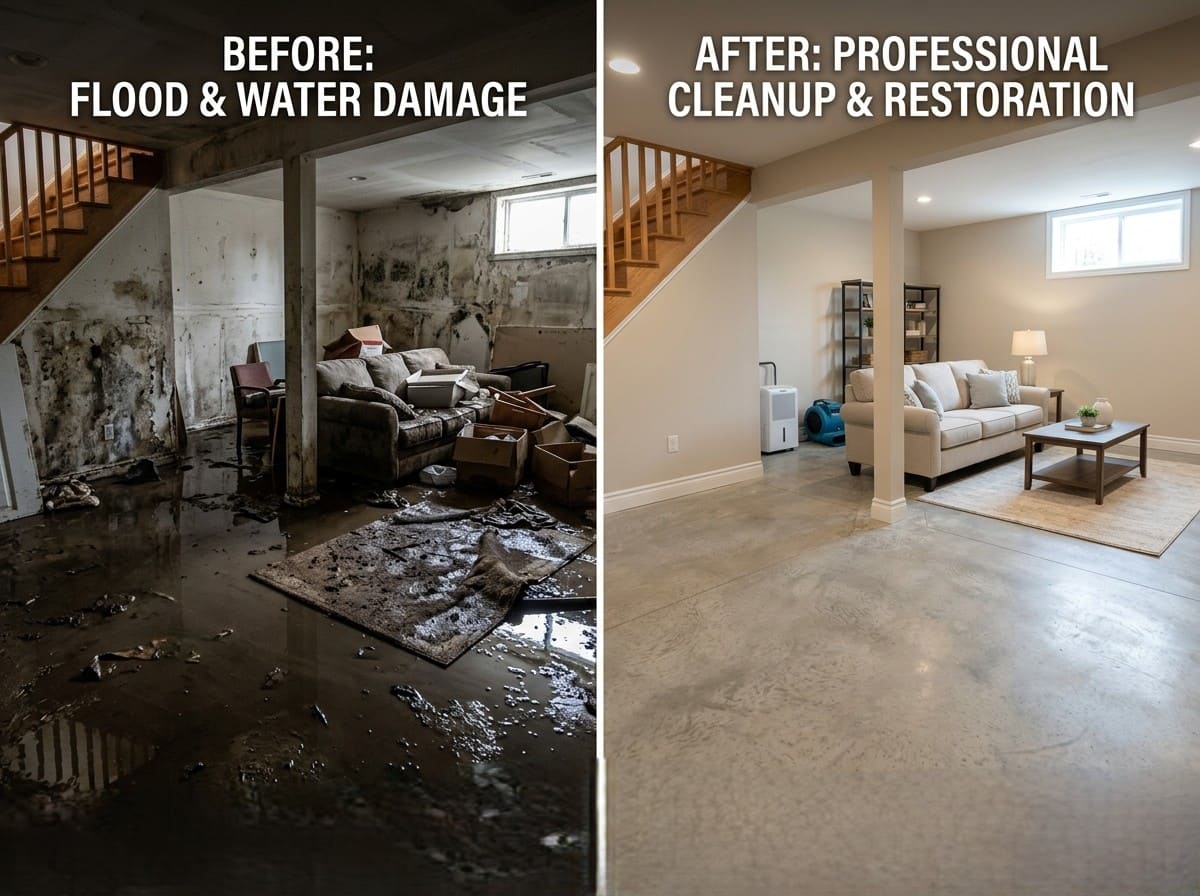
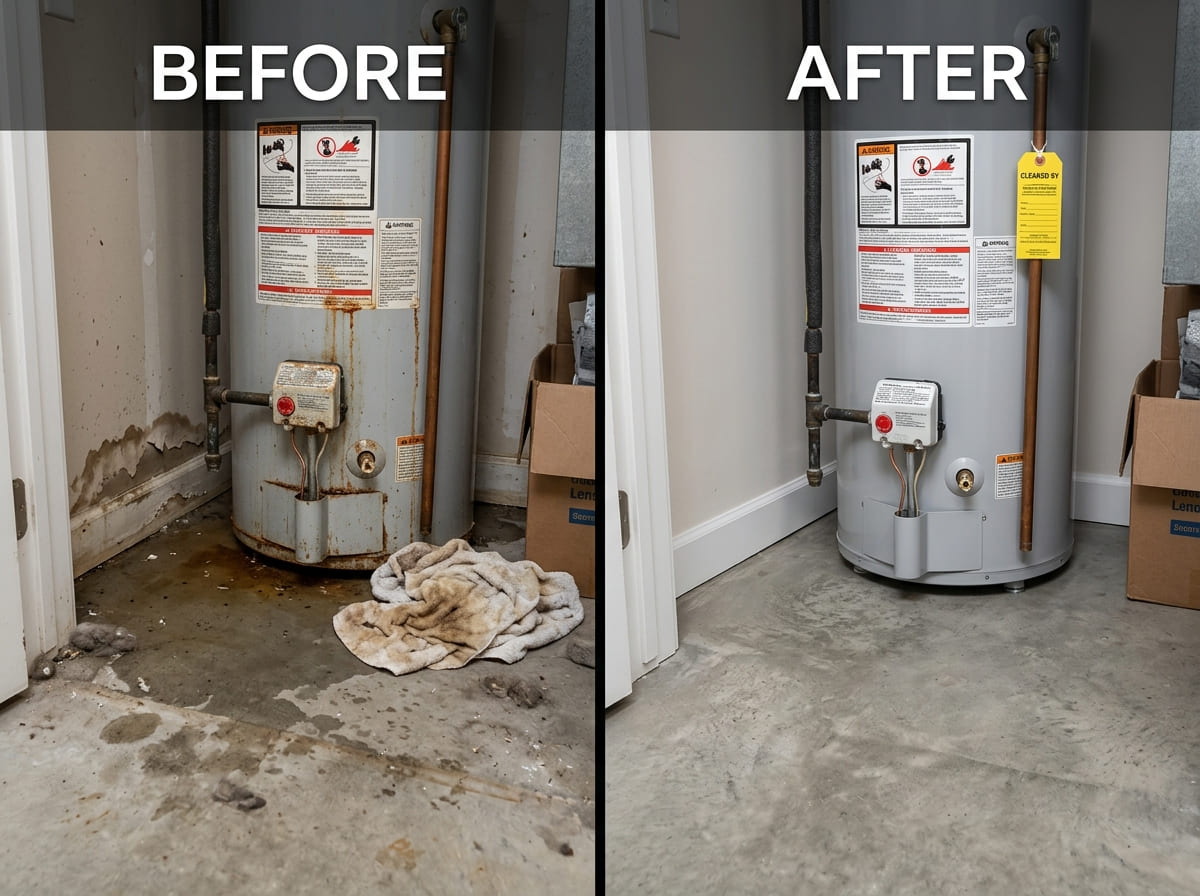
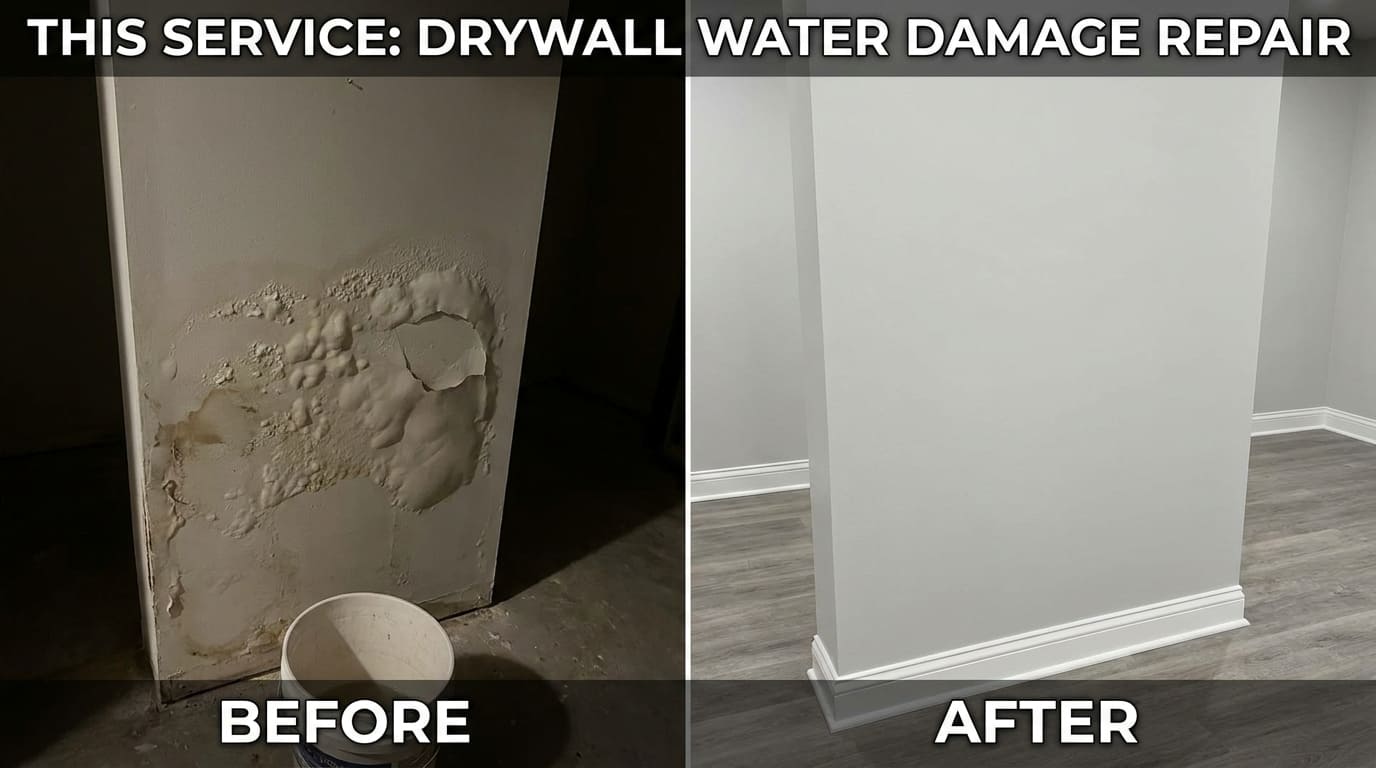
Our before-and-after gallery shows real Ameri Glen water damage restoration projects only, photographed by our own crews. You'll see the work Glendale calls us for most: burst supply lines in apartments south of the 134, ceilings brought down by an upstairs bathroom leak, slab leaks under postwar ranches, and storm water in hillside garages. Each pair shows the damage as we found it, the finished repair, and the moisture readings that proved the structure was dry before we closed the walls.
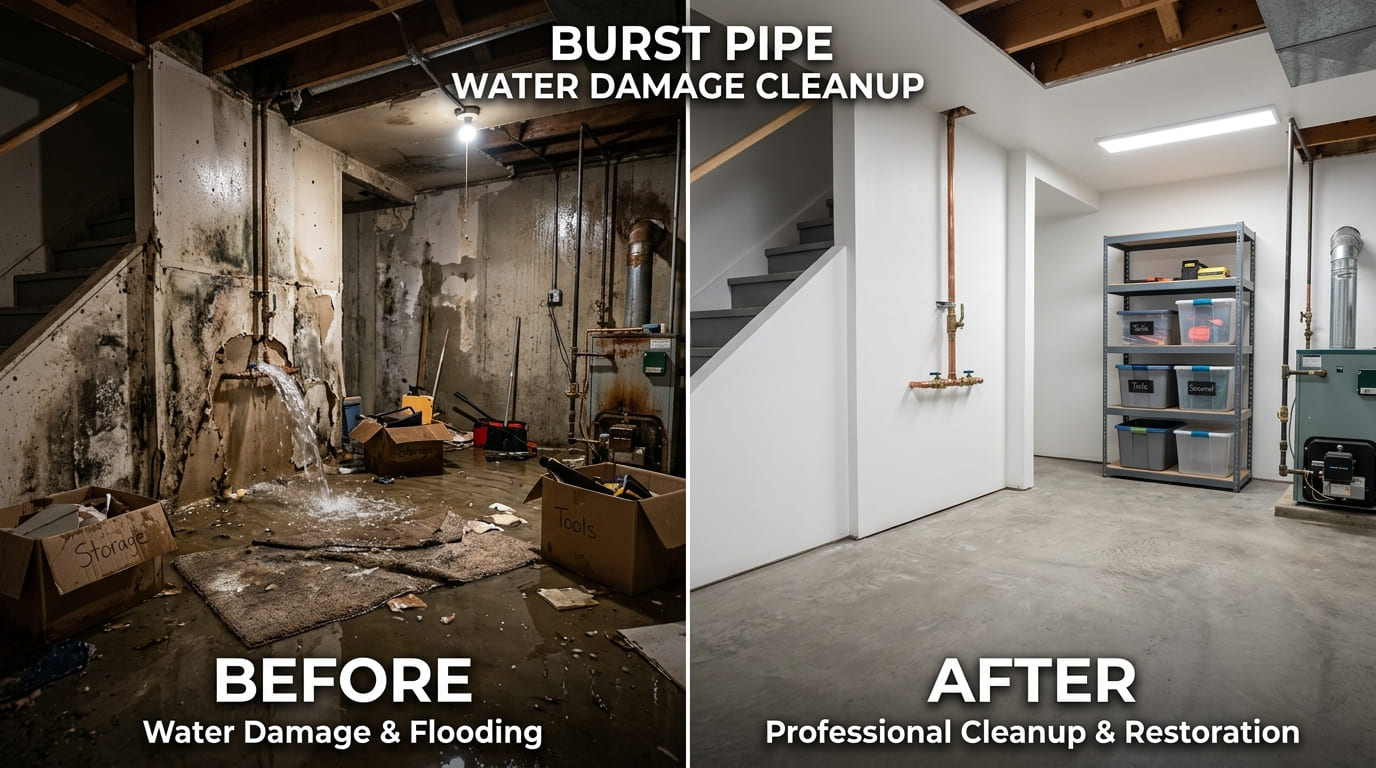
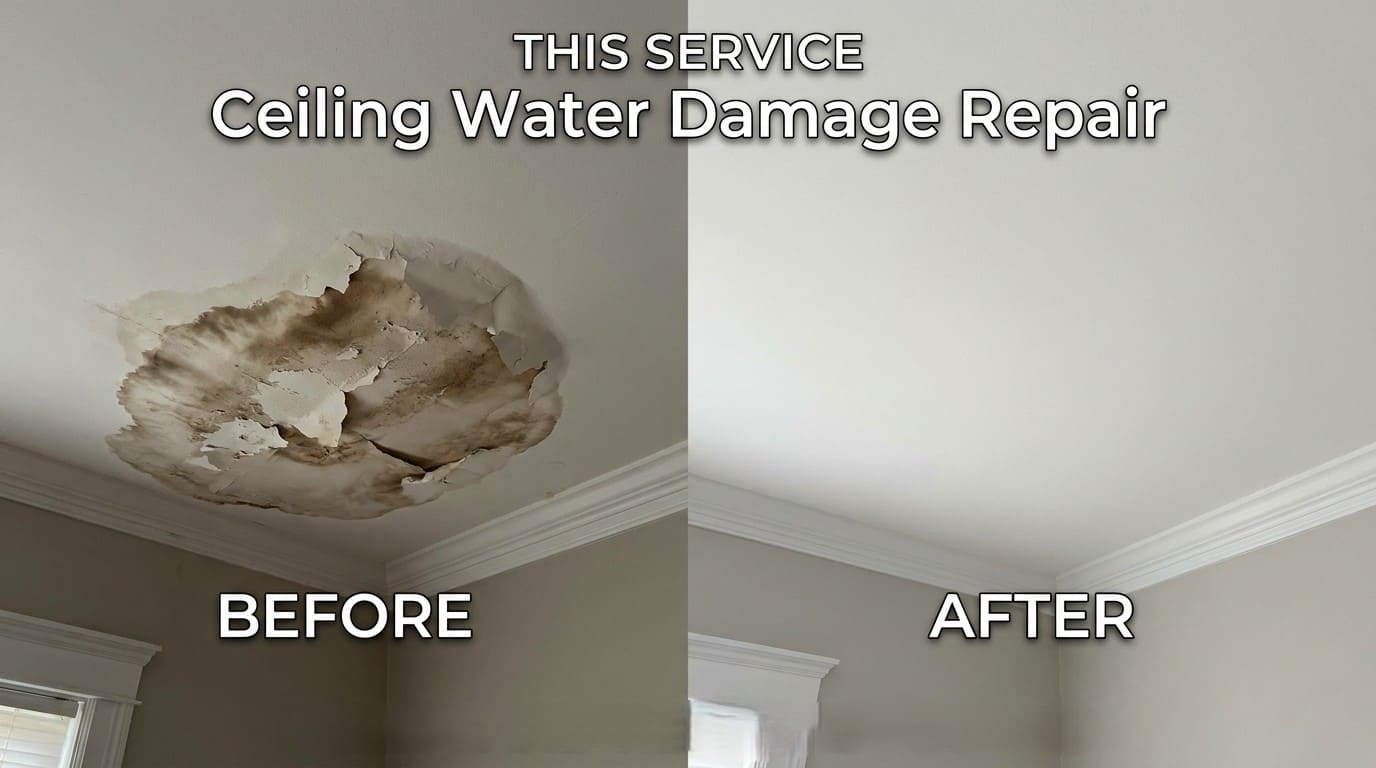
Burst pipe water damage cleanup — before and afterCeiling water damage repair — before and afterStorm & flood damage cleanup — before and afterHardwood floor water damage restoration — before and afterWater heater leak cleanup — before and afterDrywall water damage repair — before and after
Glendale's Water Damage Calendar: Seasonal Risks Month by Month
Glendale averages about 18 inches of rain a year, most of it packed into a handful of intense storms between December and March. Roofs and drains can go months without a real test, so problems tend to show up all at once. Here's what we see through the year and what to do about it.
October–November: First Rain and Santa Ana Aftermath
The first real storm finds everything summer and the Santa Ana winds left behind: cracked roof underlayment, loose tiles, clogged gutters and sun-baked caulk around windows. Leaks that stayed hidden all summer show up overnight.
Clear gutters, downspouts and yard drains before the first storm.
Have loose or broken roof tiles and flashing checked.
Reseal windows and doors on the storm-facing side of the house.
Make sure everyone at home knows where the main water shutoff is.
December–February: Atmospheric Rivers and the El Niño Peak
This is Glendale's wettest stretch, and February is usually the wettest month of all. The storms that began on showed what's at stake: a substation failure cut power to 7,000 residents, a water main broke on Maple Street east of Central Avenue, and water intrusion damaged equipment on the first floor of the Police Department. The City Council ratified a local emergency on . Up the 2 in the Crescenta Valley, La Crescenta water damage repair calls climb whenever runoff off the San Gabriels overwhelms street drains. A strong El Niño raises the odds of a wet winter but doesn't guarantee one, so prepare without panicking.
Sandbag downslope doors and garage entries. Free sandbag locations are posted at READY.LACounty.gov during storm season.
Keep yard drains, swales and retaining-wall weep holes clear.
Move valuables, documents and electronics off garage floors.
Watch for National Weather Service flash flood warnings, and never drive through flooded streets.
March–April: Late Storms and Hidden Moisture
Late-season storms land on soil and walls that are already saturated. This is also when winter's hidden leaks surface as peeling paint, swollen baseboards, musty closets and mold on exterior walls.
Check closets on exterior walls, under sinks and in the attic for stains or odors.
Look for bubbling paint or white mineral deposits on stucco and block walls.
Report storm damage to your insurer promptly; late notice can complicate a claim.
May–September: Heat, AC Condensate, Water Heaters and Slab Leaks
Dry months bring a different set of failures. Heat waves push AC systems hard, and clogged condensate lines overflow in attics. Hard water shortens the life of water heaters, and aging copper lines under slabs fail without warning. Summer travel means a small leak can run for days before anyone notices.
Flush the water heater and check its drain pan.
Make sure the AC condensate line has a working float switch.
Replace rubber washing machine hoses with braided stainless steel.
Shut off the main water valve before you travel, or install a leak sensor with automatic shutoff.
Dispatch & Access Planning: How We Reach You Fast Anywhere in Glendale
In emergency water damage restoration, speed starts before the truck leaves. Our shop on West Colorado Street sits in downtown Glendale, a short drive from the 134, the 5 and the 2, so crews can reach Adams Hill, Rossmoyne, Montrose or Glenoaks Canyon fast. We also cover neighboring cities across Los Angeles County.
When you call, the dispatcher asks the questions that affect access: gate codes and HOA rules, the clearance of a tuck-under or subterranean garage, parking on narrow hillside streets, and who can let us in if you're at work or out of town. Truck-mounted units won't fit under most apartment parking decks, so we bring portable extractors and run hose instead. During big storms we route around flooded underpasses and closed canyon roads, and we prioritize active leaks, sewage and ceilings at risk of collapse. You get an honest arrival window, not a guess.
How Can I Prevent Water Damage From Coming Back?
Fix the cause, then make the next leak easy to catch. We dry and repair the damage; a licensed plumber or roofer should repair the source, and we'll coordinate with yours or recommend one. After that, a few habits prevent most repeat calls in Glendale homes:
Replace aging supply lines. Swap rubber washer hoses and old toilet and faucet lines for braided stainless steel, and replace corroded angle stops.
Protect the water heater. Install a drain pan piped to a drain, flush the tank yearly and plan for replacement as it ages, especially with Glendale's hard water. If it already failed, see our water heater leak cleanup.
Add leak sensors. Battery sensors under sinks, behind toilets and beside the water heater cost little, and a smart shutoff valve can stop the water automatically.
Know your shutoffs. Label the main valve and the angle stops, and make sure everyone in the house can reach them.
Manage roof and site drainage. Clean gutters before the first rain, extend downspouts away from the foundation and keep hillside swales and drains clear.
Watch the tile roof underlayment. Clay tiles last for decades, but the underlayment beneath them usually wears out first.
Check your water meter. Turn off every fixture and watch the meter's leak indicator. If it moves, you have a hidden leak.
Inspect after every big storm. Look in the attic, in closets on exterior walls and under sinks for fresh stains or musty odors.
What We Fix — From Warning Signs to Targeted Repairs
Most people call us because of a symptom, not a diagnosis. Here's how common warning signs in Glendale homes map to the repair that actually fixes them:
Brown ring, bubbling paint or a sagging ceiling → ceiling water damage repair, starting with finding the leak above.
Not sure what you're looking at? Email photos to ameriglenrestoration@gmail.com or describe it on the phone, and we'll tell you whether it needs a visit today.
How Much Does Water Damage Restoration Cost in Glendale, CA?
Most residential water damage jobs cost between about $1,300 and $6,500, with an average near $3,900, according to Modernize's 2026 cost guide. Pricing usually runs $3 to $4 per square foot for clean water, $4 to $6 for gray water and $7 to $7.50 for black water. Large, multi-room losses that need structural repairs can climb much higher.
Five things move the cost of water damage restoration in Glendale the most: the water category, how many rooms and materials got wet, how long the water sat, whether pre-1980 materials need asbestos or lead testing, and how much rebuild work follows the drying. If the loss is sudden and accidental, such as a burst supply line, many homeowners policies cover it, minus your deductible. Gradual leaks, flooding from outside and mold from long-term moisture are often excluded or limited. A California FAIR Plan policy doesn't cover water damage on its own; that coverage comes from a separate Difference in Conditions (DIC) policy.
Current offers (terms apply; one offer per project):
Free on-site estimate and a direct-to-insurance invoicing package
$100 credit on your first project with us
10% materials waiver for seniors and veterans
20% initial and community discount (ask for details)
On insurance claims, any discount appears on the invoice your insurer receives. We never waive or absorb deductibles.
Our Proven 6-Step Water Damage Restoration Process in Glendale
Every job follows the same documented sequence, whether it's a single bathroom or a three-unit building.
Step 1: 24/7 Phone Triage and Dispatch
Call (747) 342-2444 and we'll walk you through shutting off the water and making the area safe while a crew loads up. We ask about the source, the rooms affected, the age of the building and access, so the right equipment arrives on the first trip.
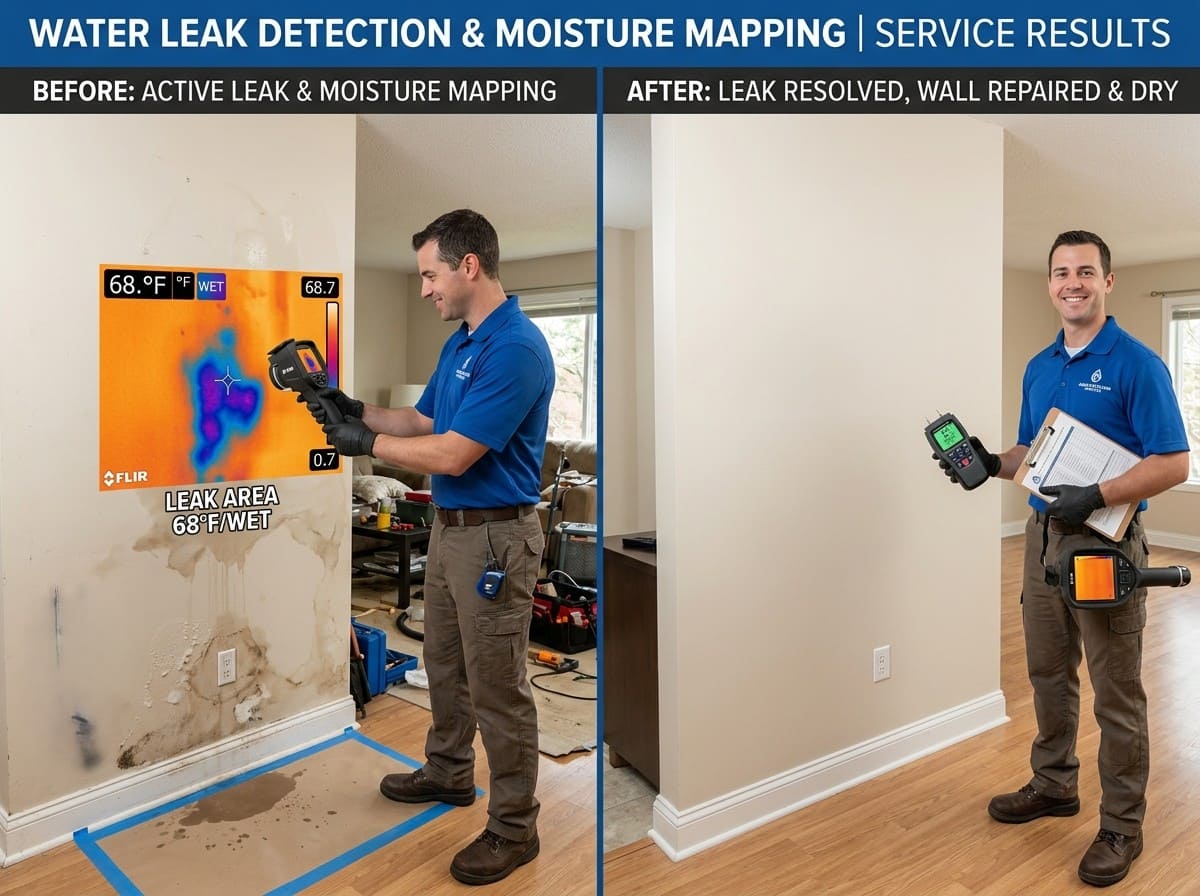
Step 2: Inspection, Moisture Mapping and Thermal Imaging
A certified technician finds the source, classifies the water by IICRC category and class, and maps moisture through floors, walls, ceilings and cabinets with meters and a thermal camera. In older homes, we flag suspect asbestos and lead materials before anything is disturbed. Read more about leak detection and moisture mapping.
Step 3: A Clear Plan, Written Estimate and Insurance Coordination
You get a written scope in plain English before work begins, plus photos and a carrier-format estimate for your insurance company. We can bill your insurer directly and keep your adjuster, HOA or property manager updated.
Step 4: Emergency Water Extraction
Day one is about getting bulk water out fast. Our emergency water removal in Glendale uses truck-mounted and portable extractors, followed by controlled removal of saturated pad, baseboards or drywall only where the readings call for it.
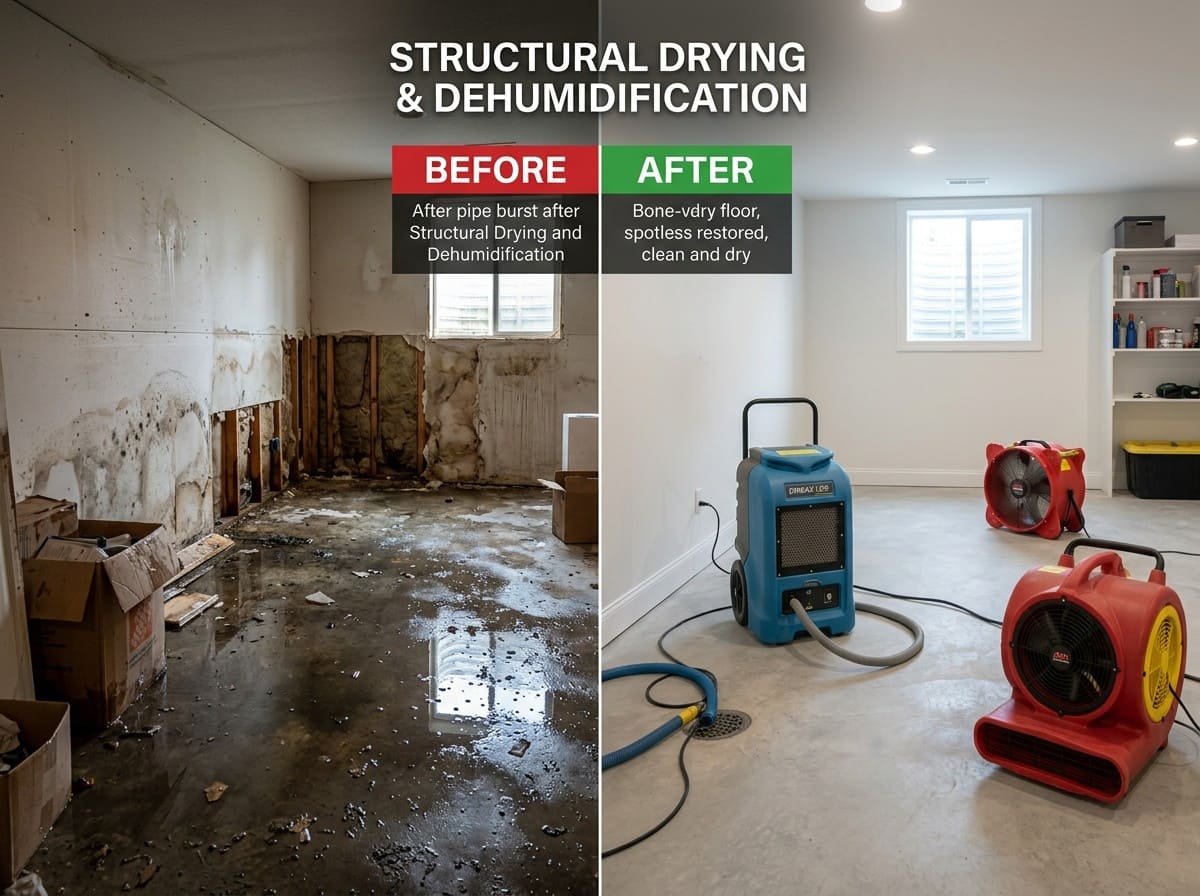
Step 5: Structural Drying and Dehumidification
LGR dehumidifiers, air movers and, where needed, cavity and floor-drying systems run around the clock. We take readings every day, adjust equipment and log the results until each material reaches its dry standard, usually within 3 to 5 days. Learn about our structural drying and dehumidification.
Step 6: Sanitize, Rebuild and Verify
Affected areas are cleaned and treated, then our team rebuilds drywall, plaster, paint, flooring and trim, with permits pulled when required. A final walkthrough and moisture report confirm the job is complete.
What's Included in a Free Water Damage Inspection?
Every Glendale water damage restoration job starts with a free on-site inspection that gives you a clear picture of the damage before you spend a dollar. It includes:
Source check: where the water came from and whether it's fully stopped.
Category and class rating: how contaminated the water is and how much material absorbed it, per IICRC S500.
Moisture mapping: pin and pinless meter readings plus thermal imaging across floors, walls, ceilings, cabinets and crawl spaces.
Safety flags: electrical hazards, sewage contamination and suspect asbestos or lead materials in older homes.
Photo documentation: timestamped photos and a sketch of the affected areas for your records and your insurer.
Written scope and estimate: what needs to be removed, dried and rebuilt, with a plain-English walk-through of your insurance next steps.
Most Glendale households rent, so a single leak often involves an owner, a manager and one or more tenants, each with different responsibilities and policies. We work for whoever hires us, and we document the job so everyone else can rely on it.
For landlords and property managers:
California treats visible mold growth, as determined by a health or code enforcement officer, as a substandard housing condition (Health & Safety Code §17920.3, added by SB 655). Fast drying protects both the unit and your compliance.
In an emergency, Civil Code §1954 allows entry without the usual 24-hour notice. For follow-up drying and repairs, we schedule visits around proper notice.
We provide moisture logs, photos and a scope your carrier, and your tenants' renters insurers, can use.
Phased work and portable equipment keep neighboring units livable whenever it's safe.
For tenants:
Report leaks to your landlord or manager in writing, with photos and the date.
Your landlord is generally responsible for building repairs. Renters insurance typically covers your belongings and, under many policies, temporary housing if the unit becomes unlivable.
Civil Code §1942.5 generally protects tenants from retaliation, such as rent increases or reduced services, for 180 days after a habitability complaint. This is general information, not legal advice.
Proof You Can Check Before You Hire Us
We'd rather you verify us than take our word for it. Ameri Glen Restoration has provided water damage restoration in Glendale since 2010, and in 16 years we've grown to 40 trained professionals and 10 equipped response trucks. Look up our license on the CSLB website, ask for our certificate of insurance, and ask any technician to show you their IICRC credentials. You can also learn more about our team.
Then look at how we document a job. Before we start, ask to see a sample moisture log, a thermal imaging report and a carrier-format estimate. That paperwork is what adjusters, HOA boards and property managers rely on, and it's the clearest evidence of how a restoration company actually works.
Our Water Damage Restoration Services in Glendale, CA
From a single wet bathroom to a flooded commercial suite, our water damage repair in Glendale covers the full job, from the first call to the final coat of paint. Explore each service:
We also handle mold remediation, sewage and Category 3 cleanup, and content restoration and document drying for water-damaged belongings.
What Is the Safest Way to Clean Up Water Damage at Home?
Protect people first, stop the water second, and only then decide what you can handle yourself. Shut off the water and, from a dry spot, the power to wet rooms. A small clean-water spill on tile or vinyl that you catch right away is usually safe to mop up and dry with fans. Stop and call a professional for water damage cleanup if the water came from a toilet, a sewer line or outdoors, if a ceiling is sagging, if water reached outlets or appliances, or if materials have been wet longer than a day. The same goes for any home built before 1980 where you'd need to cut drywall, plaster or flooring. Those situations carry health, electrical and asbestos risks that a mop and a box fan can't handle safely.
Got Questions? Talk to a Glendale Water Damage Specialist
Whether water is on the floor right now or you're trying to understand a stain that appeared after the last storm, we're glad to help. You'll talk to someone who knows Glendale homes, not a national call center. Prefer to learn about us first? Visit our about page or our contact page.
Serving Glendale and the Crescenta Valley Since 2010
Since 2010, Ameri Glen Restoration has worked by a simple standard: answer at any hour, explain the work in plain English and stand behind every moisture reading. Sixteen years later, our crews work in every corner of the city, from 1920s homes in Rossmoyne and Brockmont Park to downtown condos near the Americana at Brand, hillside homes in Chevy Chase Canyon and family homes in Montrose and the Crescenta Highlands. The neighborhoods keep changing, but the commitment hasn't: show up fast, dry it right and rebuild it so it looks like nothing happened.
Company Gallery
Real Glendale Jobs. Real Drying Logs. Real Results.
Photos from our own crews, from emergency extraction to the finished rebuild.
Every photo in this gallery comes from an Ameri Glen job: trucks staged outside Glendale apartment buildings, LGR dehumidifiers and air movers running in a 1920s living room, thermal images showing water hiding behind plaster, and finished kitchens, baths and hardwood floors after the rebuild. No stock photos, ever.
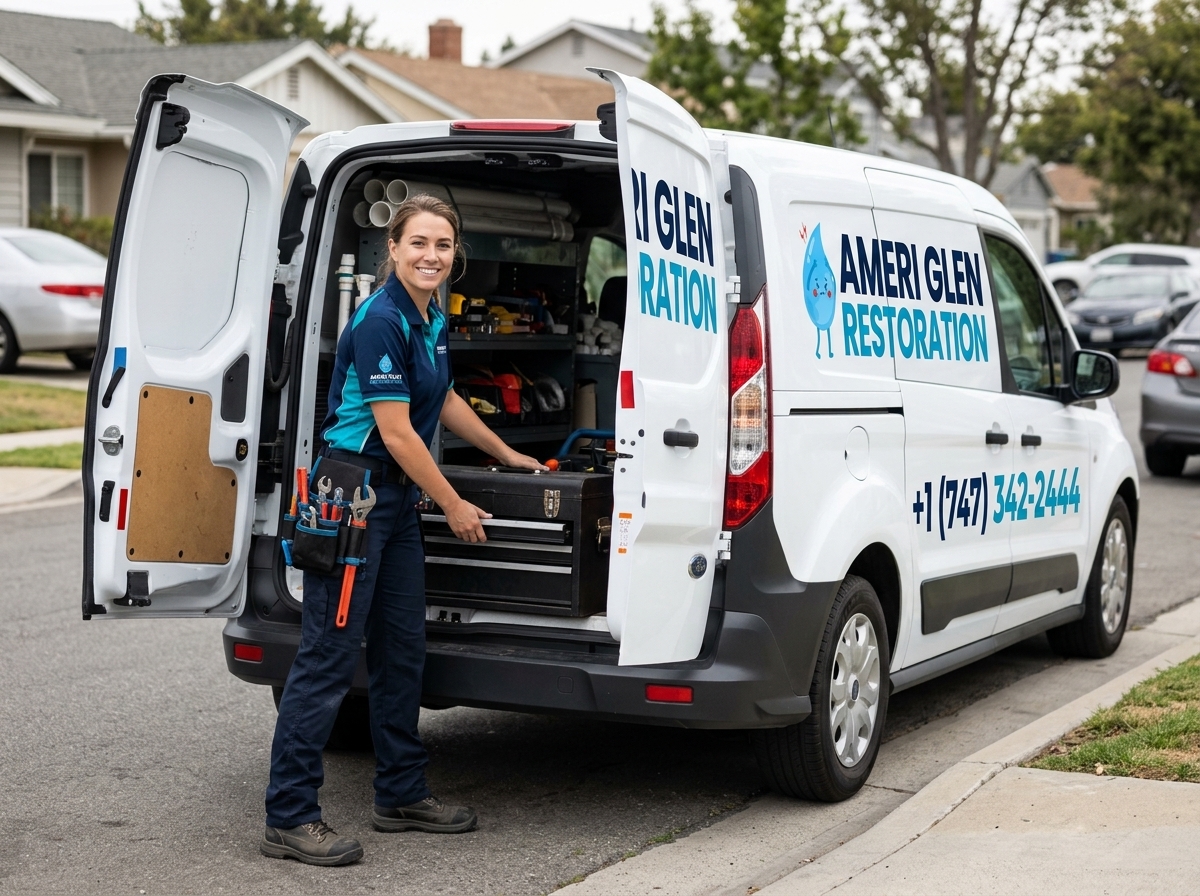
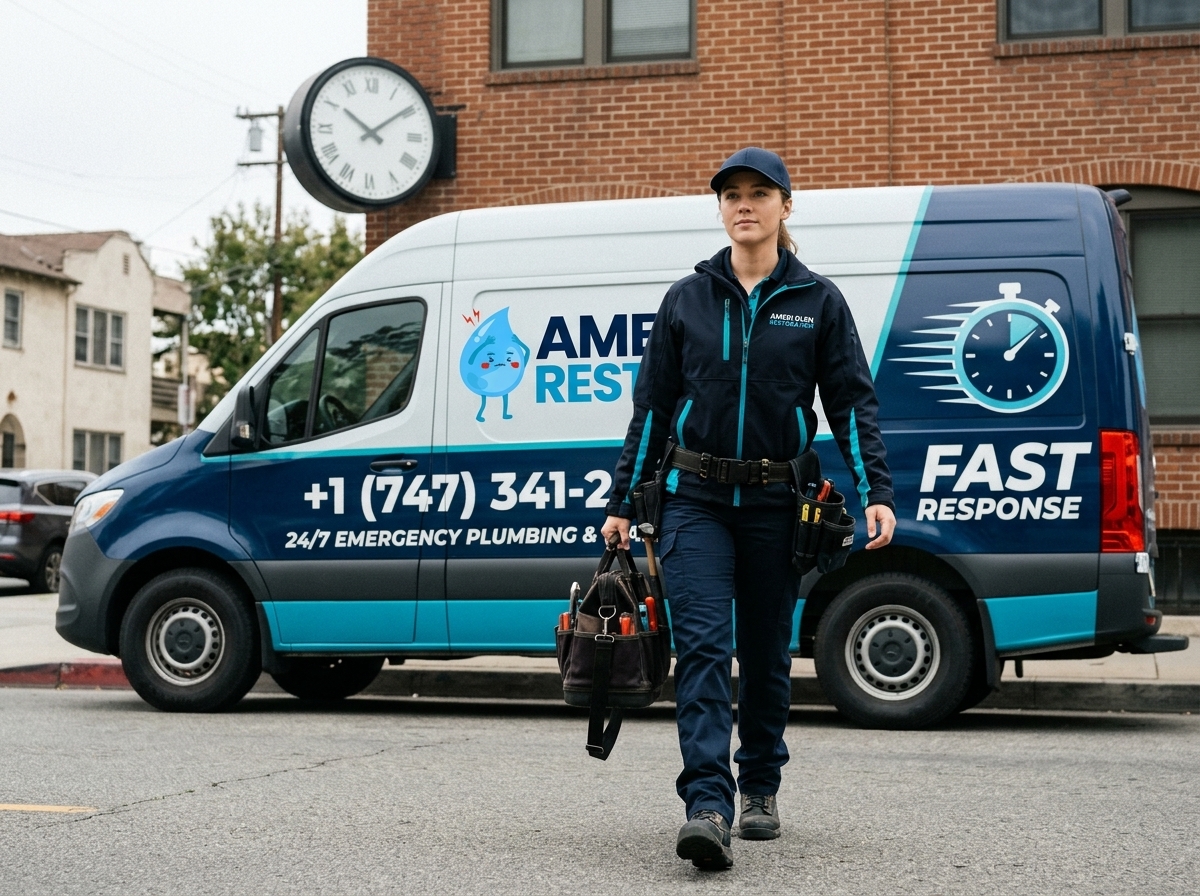
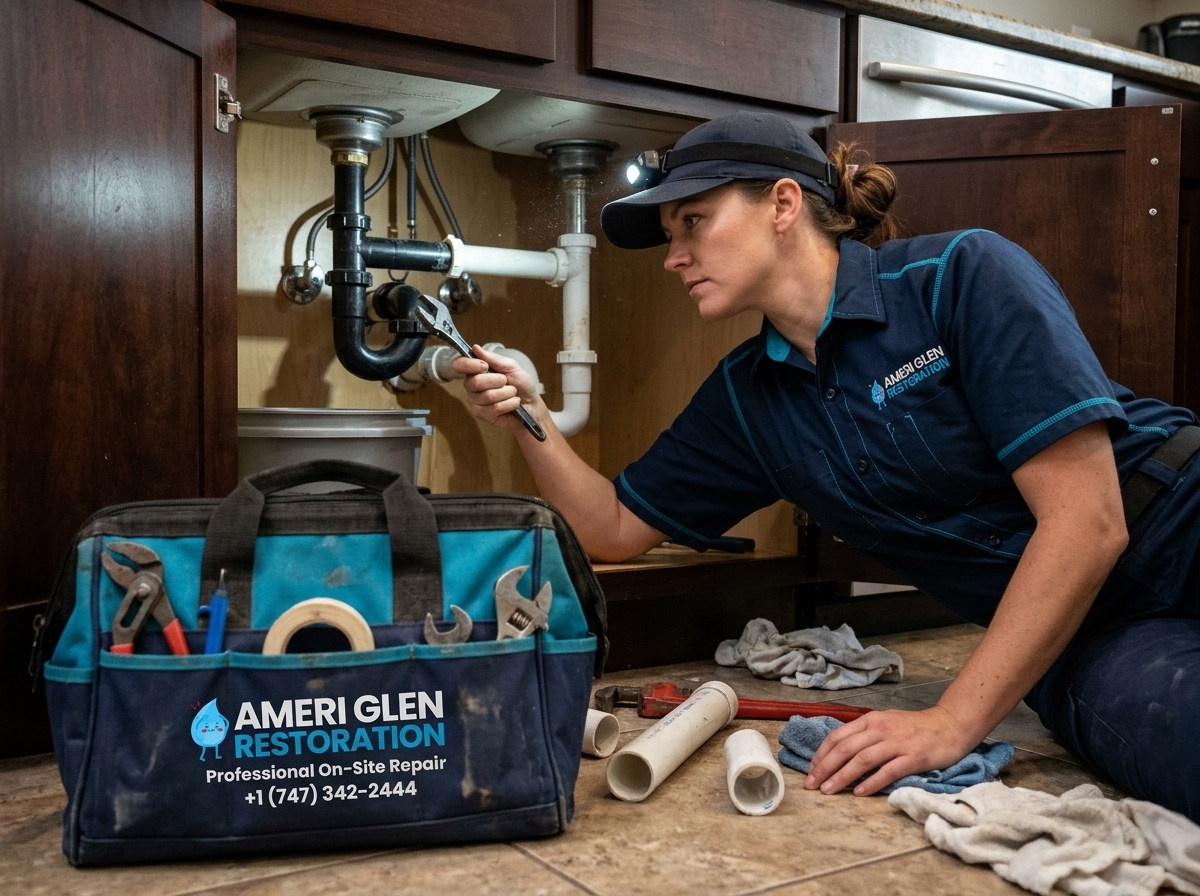
Response fleet ready for dispatchEmergency technician on a fast response callUnder-sink leak detectionWater heater leak specialist at workFinished restoration after the rebuildThe Ameri Glen restoration team
Looking for the Best Water Damage Restoration Near Me in Glendale?
The best water damage restoration near you is the company that answers right away, arrives fast and proves the job is done. When you compare any water damage restoration company in Glendale, look for a CSLB license number on the website, IICRC-certified technicians, true 24/7 dispatch from a local shop, daily moisture logs and carrier-format paperwork. Be wary of anyone who quotes a price before seeing the damage or pressures you to sign on the spot.
We cover all of Glendale, including ZIP codes 91201 through 91208 and 91210. North to south, that means Montrose and Verdugo City (91020, 91046), Sparr Heights, the Crescenta Highlands, Verdugo Woodlands, Oakmont, Glenoaks Canyon, Chevy Chase Canyon, Rossmoyne, Brockmont Park and Royal Boulevard. Then come downtown's City Center, Brand Boulevard and the Americana area, and the neighborhoods south of the 134: Adams Hill, Citrus Grove, Pacific-Edison, Tropico, Somerset, Mariposa, Vineyard, Grand Central and Pelanconi. We also serve La Crescenta (91214) and La Cañada Flintridge.
Storm runoff or mudflow from outside, treated as Category 3
Extraction, mud removal, flood cuts, sanitizing and drying
“ceiling leak from upstairs unit”
A neighbor's leak with HOA and insurance questions
Source tracing, moisture maps for both units and a report for every party
Not sure which one fits? Describe what you see, and we'll tell you honestly whether it needs a crew tonight or an appointment this week.
When to Call Today — and What Can Wait
Call Today
Water is still flowing, or you can't find the shutoff.
Sewage or floodwater is inside the home.
A ceiling is sagging, bulging or dripping near light fixtures.
Water has reached outlets, the electrical panel or appliances.
Drywall, flooring or cabinets have been wet for more than 24 hours.
Water is coming from the unit above or spreading into the unit below.
Can Wait for a Scheduled Visit
An old, dry ceiling stain that isn't growing.
A small drip that's already fixed, with the area dried within hours and no odor.
Cracked grout or worn caulk around a tub or shower.
A pre-storm check of your roof, gutters and drainage.
When in doubt, call. If it can wait, we'll tell you so and book a time that works for you.
Glendale Homes by Type — Where Water Damage Starts
Glendale's housing spans a century, and each era fails in its own way. Here's where we usually find the water:
Home Type
Where You'll Find It
Where Water Usually Gets In
1920s–1930s Spanish Colonial Revival, Tudor Revival and French-inspired homes
Rossmoyne (Glendale's largest historic district, with 503 homes), Royal Boulevard, Brockmont Park
Aging galvanized supply lines, clay tile roof underlayment, flat-roof scuppers and parapets, lath-and-plaster walls over crawl spaces
1940s–1960s ranch and postwar homes
Sparr Heights, Montrose, the flats of the Verdugo Woodlands
Copper pinhole and slab leaks, aging water heaters in interior closets, cast-iron drain lines
Hillside and canyon homes
Chevy Chase Canyon, Glenoaks Canyon, Oakmont, the San Rafael Hills
Storm runoff from the slope above, clogged retaining-wall drains, downslope walls and garages
1960s–1980s apartments and courtyard buildings
South of the 134: Adams Hill, Pacific-Edison, Tropico, Somerset, Mariposa
Stacked bathrooms, shared walls, tuck-under parking, failed supply lines and toilet overflows that reach the units below
Modern condos and mid-rise buildings
Downtown: City Center, Brand Boulevard, the Americana area
Fire sprinkler discharges, washer and dishwasher leaks, and disputes over common-area versus unit responsibility
Commercial properties
Brand Boulevard, Central Avenue, the San Fernando Road corridor, Grand Central
Roof drains, restroom overflows, sprinkler discharges and sewer backups
Whatever the type, if a building went up before 1980, we test suspect materials before cutting. And whatever its age, we dry to measured standards, not to how a wall feels to the touch.
Before We Arrive — What to Do Right Now
Shut off the water. Close the angle stop under the fixture or the main shutoff, usually near the front hose bib or in the meter box at the curb. In a condo, look for a unit shutoff in a utility closet or ask building staff.
Cut power to wet areas, safely. Flip breakers only if you can reach the panel from a dry spot. Never stand in water to do it.
Don't start tearing things out. In homes built before 1980, wet drywall, plaster, popcorn ceilings and old flooring need testing before anyone cuts them.
Move what matters. Carry electronics, documents, rugs and photos to a dry room, and put foil or plastic under furniture legs.
Document everything. Photograph and video the water, the source and damaged belongings before cleanup begins.
Skip the household vacuum and the HVAC. Regular vacuums aren't built for water, and running the air system can spread moisture and spores.
Stay out of dirty water. Keep kids and pets away from sewage or floodwater, and don't touch it without gloves and boots.
Notify the right people in writing. Tell your HOA, landlord or property manager, and the neighbor above or below, with the date and photos.
Find your policy number. Call your insurer to open a claim, or ask us to help you start it when we arrive.
Codes and Licensing That Shape Water Damage Work in Glendale
Reviewed .
Water damage restoration in Glendale sits under state, regional and city rules. Here's what applies and how we handle each.
South Coast AQMD Rule 1403: Asbestos Surveys Before Tear-Out
Glendale is in the South Coast Air Quality Management District, where Rule 1403 requires an asbestos survey by a Cal/OSHA Certified Asbestos Consultant before renovation or demolition. For renovation, the survey covers the materials the work will disturb. The requirement still applies when a building is damaged by a sudden, unexpected event, so wet drywall in an older home gets tested before it's cut out. Any asbestos found is removed by a licensed, registered abatement contractor before restoration continues.
Lead-Safe Work and Glendale Building Permits
In homes built before 1978, disturbing painted surfaces beyond small areas triggers the EPA's lead-safe Renovation, Repair and Painting (RRP) rules, so we contain the work area and clean up to RRP standards. Repairs that go beyond like-for-like finishes, such as electrical, plumbing, framing or larger wall and ceiling replacement, may need a permit from Glendale Building & Safety at the Permit Services Center, 633 E. Broadway, Room 101. When in doubt, we confirm with the city at (818) 548-3200 before work starts.
CSLB Licensing and What It Means for You
California requires a CSLB license for any job of $1,000 or more in labor and materials, or any job that needs a permit. Licensed contractors must show their license number in every ad and on every contract. Before you sign anything, check the license and confirm it's active and in the right classification.
HOA and Condo Rules Under California Civil Code §4775
Unless the CC&Rs say otherwise, Civil Code §4775 makes the association responsible for repairing and maintaining common areas, and each owner responsible for their own unit. The association is also generally responsible for restoring interrupted water service that begins in the common area, even when the problem extends into a unit. Because CC&Rs often change those defaults, we document where the water started and where it traveled, so the board, owners and insurers can sort out responsibility on facts rather than guesses.
Glendale Water Damage Restoration FAQ
Does homeowners insurance cover water damage in California?
Usually, if the damage is sudden and accidental, such as a burst supply line or an appliance failure. Most policies exclude or limit gradual leaks, long-term seepage, mold and flooding from outside, which needs separate flood insurance. Coverage depends on your exact policy, so we document the cause and extent of the damage in the format your adjuster needs to make a decision.
How fast can mold grow after a leak in Glendale?
Fast enough that the first two days matter most. The EPA advises drying water-damaged materials within 24 to 48 hours to prevent mold growth. In a closed wall cavity or a damp crawl space, mold can start before you see or smell it, which is why we measure moisture instead of judging by touch.
My upstairs neighbor's leak damaged my ceiling. Who pays?
It depends on where the leak started and what your building's CC&Rs say. If it began inside the neighbor's unit, their insurer is often responsible, while leaks from common pipes usually fall to the HOA. Your own policy may pay first and recover the cost later. We trace the source and document both units so each insurer has the facts.
Can you handle water damage while I'm at work or out of town?
Yes. We can coordinate access through a neighbor, a building manager or a lockbox, then send photos, moisture readings and updates so you can follow the job remotely. This is common for landlords and for owners who travel.
Do I need asbestos testing before water-damaged drywall comes out?
In Glendale, generally yes. South Coast AQMD Rule 1403 requires an asbestos survey by a Cal/OSHA Certified Asbestos Consultant before renovation, and the requirement applies even after sudden damage like a leak or flood. Testing matters most in homes built before 1980, when asbestos was common in joint compound, textured ceilings and flooring.
What's the difference between water mitigation and water damage restoration?
Mitigation stops the damage from spreading: extraction, controlled removal of wet materials and structural drying. Restoration returns the property to its pre-loss condition with drywall, paint, flooring, cabinets and trim. Insurers often treat them as separate line items, and some companies do only one. Ameri Glen provides water mitigation in Glendale and the full rebuild that follows, so one team carries the job from first call to final walkthrough.
How much does water damage restoration cost in Glendale?
Most residential jobs land between about $1,300 and $6,500, according to 2026 national cost data, with costs rising for contaminated water, multiple rooms or major rebuilds. Your inspection and written estimate are free. If the loss is covered, we can bill your insurer directly, so you pay only your deductible and anything your policy excludes.
Do you provide water damage restoration in Montrose, CA, and the rest of the Crescenta Valley?
Yes. Our crews work throughout Montrose, Verdugo City, La Crescenta and La Cañada Flintridge, as well as Glendale's foothill neighborhoods like Sparr Heights and the Crescenta Highlands. The drive up the 2 from our downtown Glendale shop is short, and we know the area's hillside drainage, older raised-foundation homes and storm-season debris risks.
Do you fix the leak itself?
We find it, help stop it and document it, but the permanent repair of a pipe or roof belongs to a licensed plumber or roofer. We'll coordinate with yours or recommend one, then handle the drying, cleanup and rebuild. That way, every trade works within its license.
I'm on the California FAIR Plan. Am I covered for water damage?
Not by the FAIR Plan alone. The California Department of Insurance notes that FAIR Plan residential policyholders must buy a separate policy, typically a Difference in Conditions (DIC) policy, to be covered for water damage. Check whether you have a DIC policy and what it covers before work begins; we'll document the loss either way.
Can I stay in my home while it dries?
Usually, yes, for clean-water losses limited to a few rooms. Drying equipment is noisy and warm, and affected rooms may be closed off for three to five days. Sewage, large losses or asbestos and lead concerns may mean moving out temporarily, which many homeowners policies cover as additional living expenses.
Why is my water bill suddenly so high?
A spike on your GWP bill with no change in habits often points to a hidden leak: a running toilet, a slab leak or a failed irrigation line. Turn off every fixture and watch your water meter. If it still moves, call for leak detection before the water does more damage under floors or inside walls.
Don't wait — water damage gets worse every minute! Our 40 trained restoration professionals are on standby with 10 fully equipped response trucks ready to dispatch across Glendale and the Greater Los Angeles area.